

Chimney sweep and cleaning for fireplaces in the valley
Many Las Vegas fireplaces are lit only on the coolest evenings, so soot builds slowly and is easy to forget. We clear the flue, the smoke shelf and the firebox so the chimney is ready when you are.
- Flue and firebox
- Soot and creosote removed
- Visits 7 AM to 11 PM
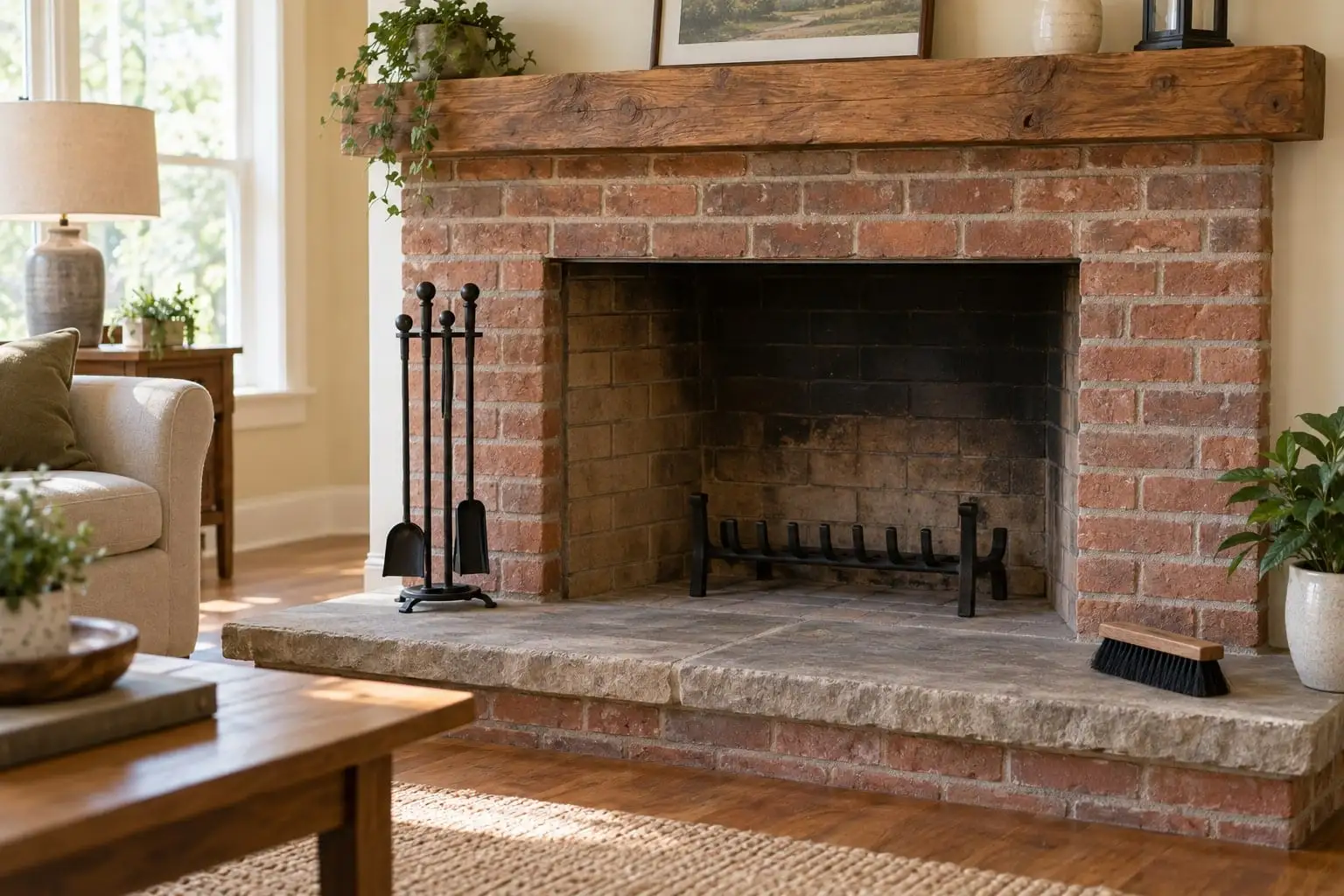
What a chimney sweep actually does
Burning wood leaves soot and a tarry film called creosote on the inside of the flue. Both can catch fire, and both narrow the passage that smoke needs to leave the house.
A sweep brushes the flue from the firebox or from the roof, vacuums the loosened debris, and cleans the smoke shelf behind the damper, where soot and fallen debris collect.
We come to your home, protect the hearth and the floor, and use a vacuum so the fine soot stays out of your living room. Prestige treats this as one service: sweeping and cleaning are the same visit.
- Flue brushed from the firebox or the roof
- Smoke shelf and damper area cleaned
- Firebox swept and vacuumed
- Hearth protected with drop cloths
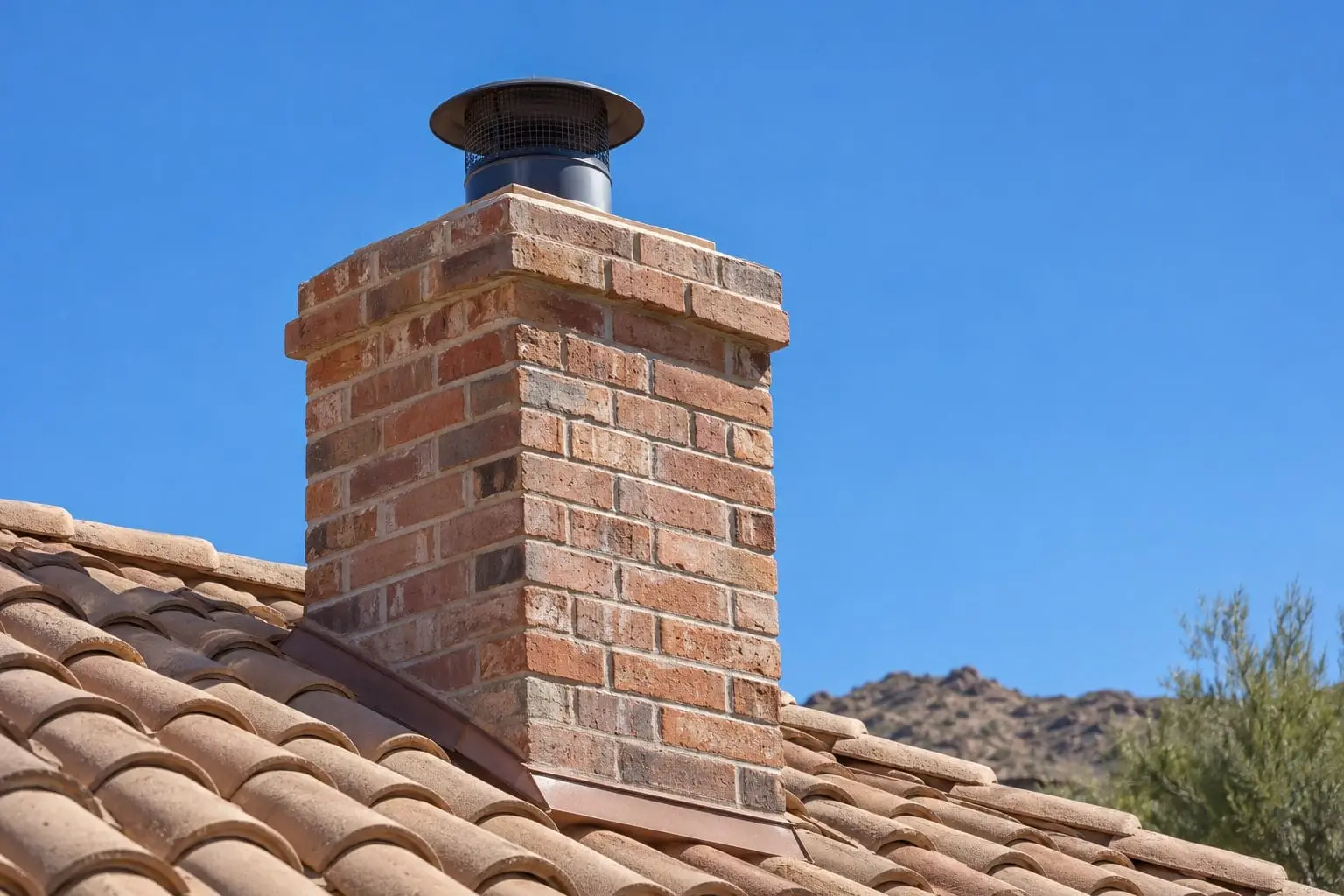
What you get with Chimney sweep and cleaning
Creosote is a fire concern
Creosote builds up in the flue with use and can ignite. Removing it is the main reason chimneys are swept at all.
Brushed, then vacuumed
We loosen what is stuck with brushes and take it out with suction, so the soot goes into the machine and not onto your rug.
Your hearth stays tidy
We lay down drop cloths, work from a sealed set-up and leave the fireplace area clean when we go.
We tell you what we see
Cracks, heavy glazing or a damaged cap show up while we work. We point them out, and we may suggest an inspection before you light a fire.
Not sure what it needs?
Tell us what needs cleaning and we’ll call you back
Four short questions, then a person calls you back to set up the visit. No obligation.
Signs the chimney is due
Some of these you can see yourself. Others only show once the fireplace is in use again.
- A smoky smell from the fireplace, even when it is not lit
- Smoke drifting into the room when you start a fire
- Black, flaky or shiny tar-like deposits inside the flue
- Soot falling into the firebox
- A fireplace that has not been used or looked at for a long time
How a visit goes
We follow the same steps on every home.
We look at the fireplace and the damper and open the flue.
We cover the hearth and the floor and seal the opening.
We brush the flue with rods and brushes sized to your chimney.
We vacuum the loosened soot, then clean the smoke shelf and the firebox.
We look at the cleaned flue, tell you what we saw, and leave the area tidy.
A sweep is not an inspection
Cleaning the flue and examining it for damage are different jobs. We look at what we can reach while we work, but we cannot see everything from the firebox.
If you are buying a home, have not used the fireplace in a long time or suspect a problem, the next step is a chimney inspection. We can book that for you.
Chimney sweep and cleaning questions
Is a chimney sweep the same as chimney cleaning?
Yes. A sweep is the traditional name for the person who cleans the flue, and the work is the same. On our site the sweep and the cleaning are one service, booked as one visit.
How often should a fireplace chimney be cleaned?
That depends on how often you burn and what you burn. A fireplace used a few evenings a year builds up slowly, but it should still be looked at before the cool season starts.
Will the room get covered in soot?
We lay drop cloths, seal the opening and use a vacuum while we brush, which keeps most of the soot contained. Some fine dust can still escape, and we clean up around the hearth before we leave.
Do gas fireplaces need cleaning too?
Gas burns cleaner than wood, so there is far less soot. The vent, the logs and the firebox can still collect dust and debris, and a gas unit may need a different kind of service than a sweep.
Other services we provide
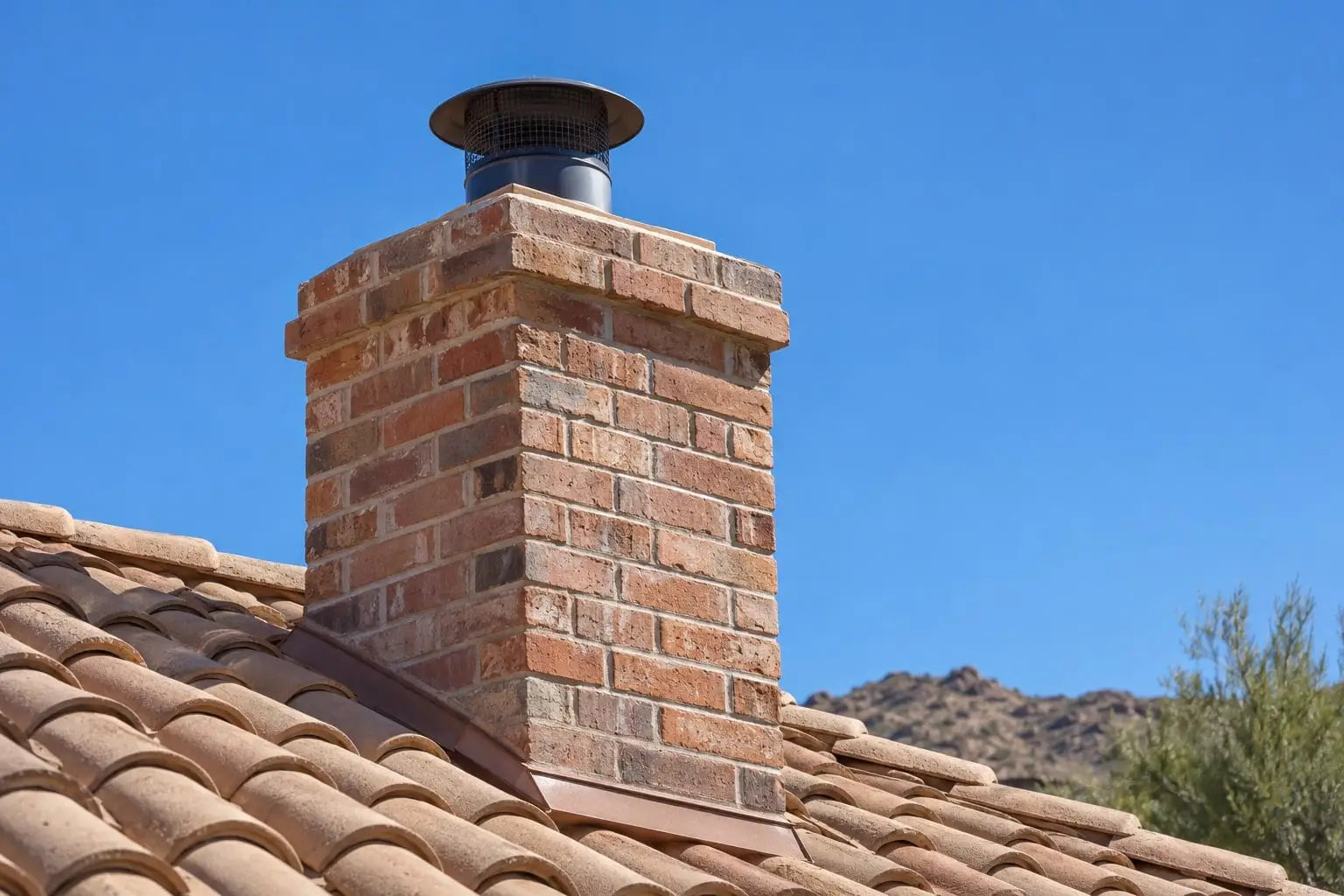
Chimney inspection
A look at the firebox, flue, damper, crown and cap, with a plain account of what we find.
Chimney repair
Common chimney repairs explained: cap, crown, flashing, mortar joints, liner and damper.
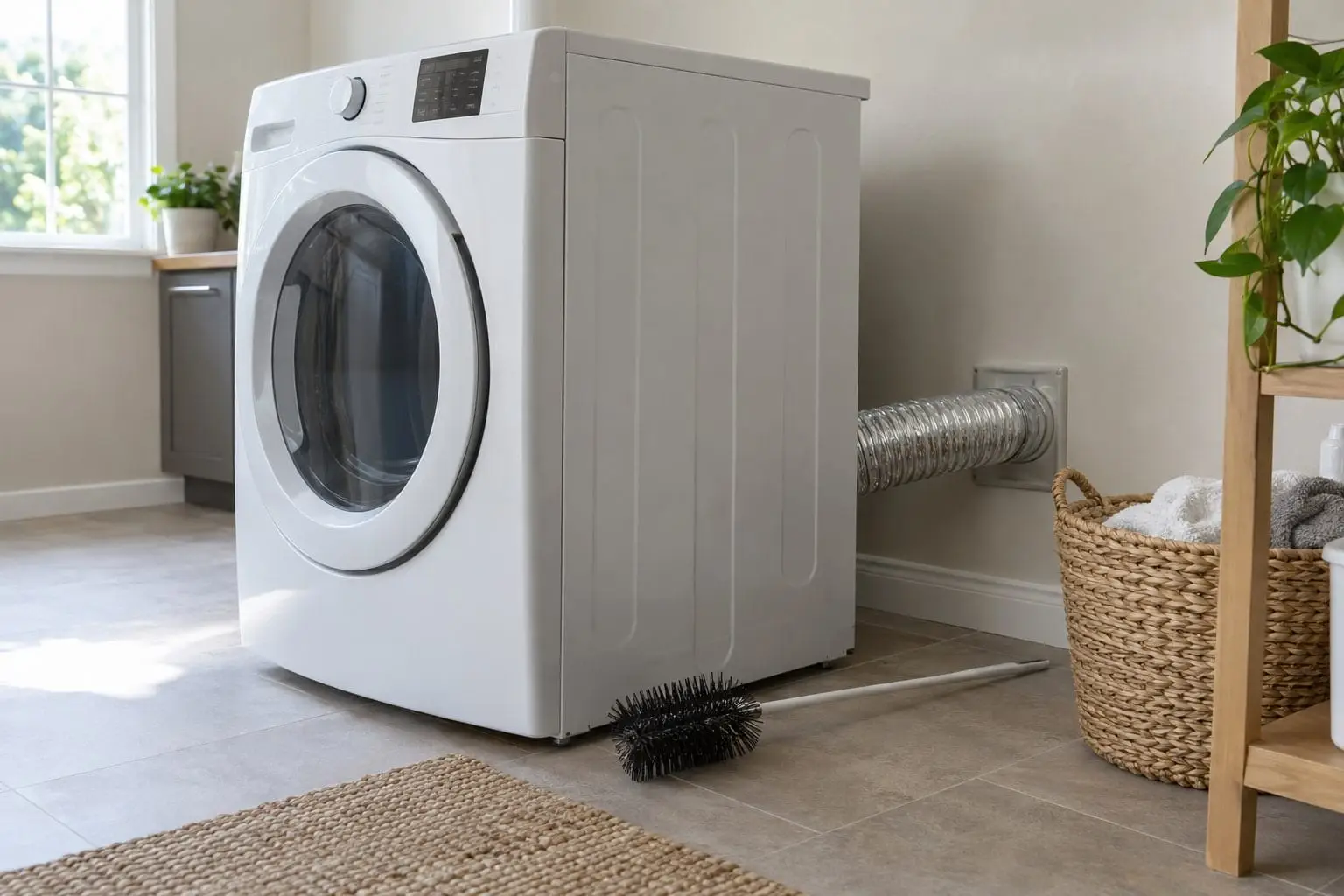
Dryer vent cleaning
Lint cleared from the dryer duct, the wall connection and the exterior vent hood.
The photographs are AI-generated illustrations, not jobs of ours.
Ready to have your chimney swept?
Tell us what needs cleaning and leave your number. We call you back to set a time.