

Chimney repair, starting with what needs fixing
Chimneys wear in predictable places. Rain and summer heat work on the crown and the mortar, and metal parts rust. Most repairs begin with an inspection, so that what gets fixed is what actually needs fixing.
- Cap, crown and flashing
- Mortar joints and liner
- Damper and firebox
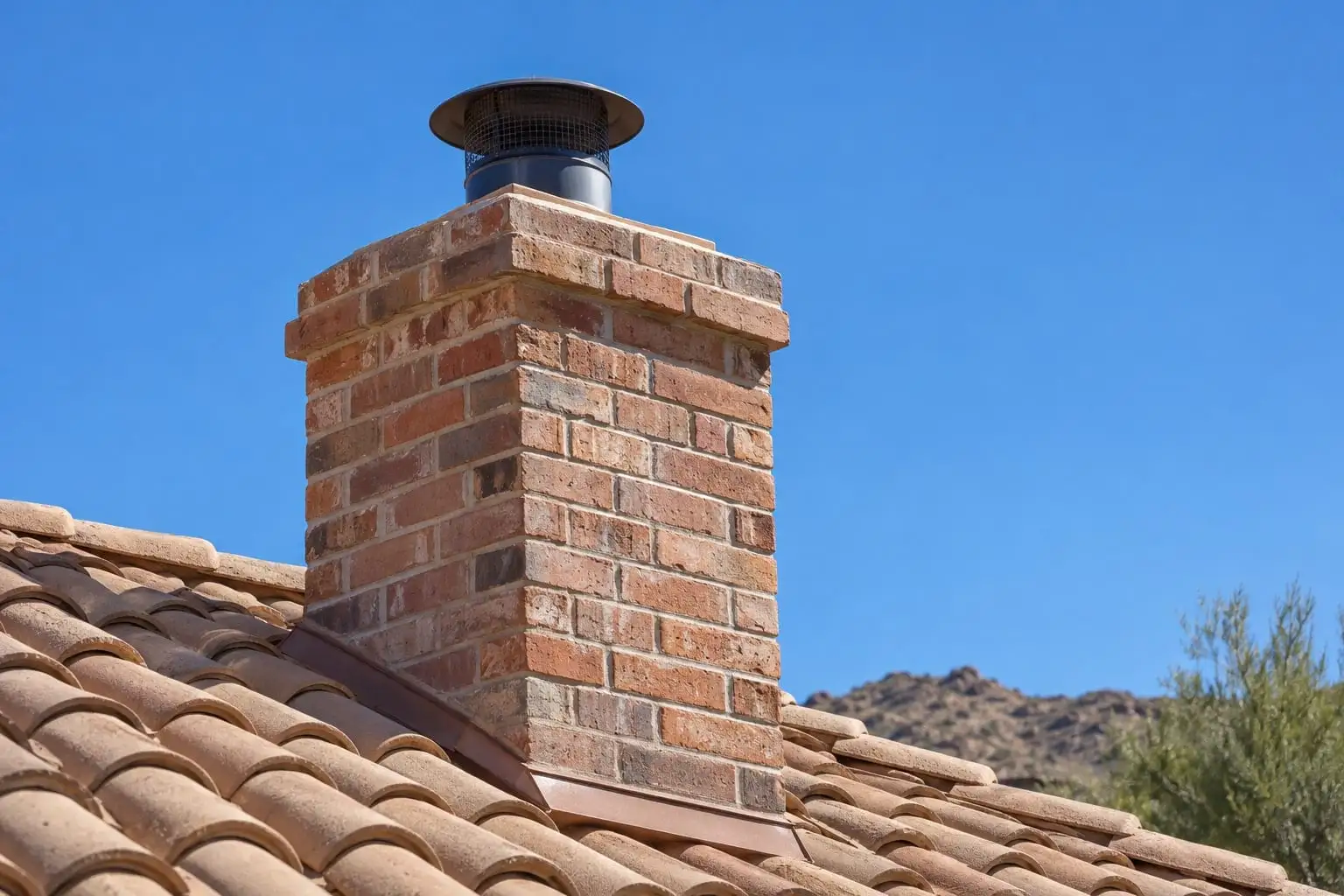
The parts that most often need work
A chimney is a stack of materials that each age differently. Brick and mortar crumble slowly, metal rusts and the seals around the roofline dry out and crack.
These are the repairs commonly done on chimneys in general. Which of them yours needs, if any, is exactly what an inspection is for.
We would rather you learn what is wrong first and then decide what to do. That is why this page leads to an inspection and not to a repair list.
- Chimney cap: replaced when rusted, bent or missing
- Crown: the slab at the top, sealed or rebuilt when it cracks
- Flashing: the metal seal where the chimney meets the roof
- Mortar joints: worn mortar replaced so water stays out
- Liner: the flue lining, repaired or replaced when it is damaged
- Damper: the flap that closes the flue, freed or replaced when it sticks
What you get with Chimney repair
Inspection first
A repair without a diagnosis is a guess. Looking at the whole chimney first shows which problems are real and which are only cosmetic.
Keeping water out
Much chimney damage starts with water getting in at the cap, the crown, the flashing or the joints. Closing those paths protects what is below.
Flue problems matter
A damaged liner or a stuck damper affects how the fireplace behaves. We recommend that you stop using it until it has been looked at.
You decide
We explain what we found and what we would do. Repair work is agreed with you first, and nothing proceeds on assumption.
Not sure what it needs?
Tell us what needs cleaning and we’ll call you back
Four short questions, then a person calls you back to set up the visit. No obligation.
Signs a chimney may need repair
These are things a homeowner can notice without climbing up.
- Missing, rusted or crooked chimney cap
- Cracks or crumbling in the crown at the top
- Gaps or loose bricks, or mortar falling out of the joints
- Water stains on the ceiling or wall near the chimney
- A damper that sticks, does not close or rusts
- Smoke entering the room, or flaking material in the firebox
What we suggest, in order
If you suspect damage, this is the path we recommend.
Book a chimney inspection so the cause is identified.
Stop using the fireplace if you see signs of a damaged flue.
Review what we found, ranked from urgent to watch.
Decide which repairs to go ahead with and in what order.
Have the chimney cleaned if it needs it, once repairs are finished.
What belongs to a specialist
Some repairs, such as rebuilding a leaning stack or relining a long flue, need a mason or a specialist contractor. We tell you honestly when something goes beyond what we do.
We do not claim to cover every kind of work. Where the right answer is another trade, we say so, and the inspection report helps you talk to them.
Chimney repair questions
Do I need an inspection before a chimney repair?
We recommend it. An inspection shows the cause and the full extent of the damage, so the repair addresses the actual problem and not only the symptom that happened to be visible from the roof or the room.
Is it safe to use my fireplace if the chimney is damaged?
Not always. A cracked liner or a damaged flue can let heat or smoke go where it should not. If you suspect damage, hold off on using the fireplace until the chimney has been checked.
What is the most common chimney problem in Las Vegas?
Water getting in at the cap, crown and flashing is common, because monsoon storms test them and summer heat wears at the seals. Rust on metal parts such as the cap and damper is also frequent.
Can a damaged chimney cap or crown be repaired, or must it be replaced?
It depends on the damage. A small crack in a crown can often be sealed, while a rusted or crushed cap is usually replaced. We explain which applies after we have seen it during an inspection.
Other services we provide
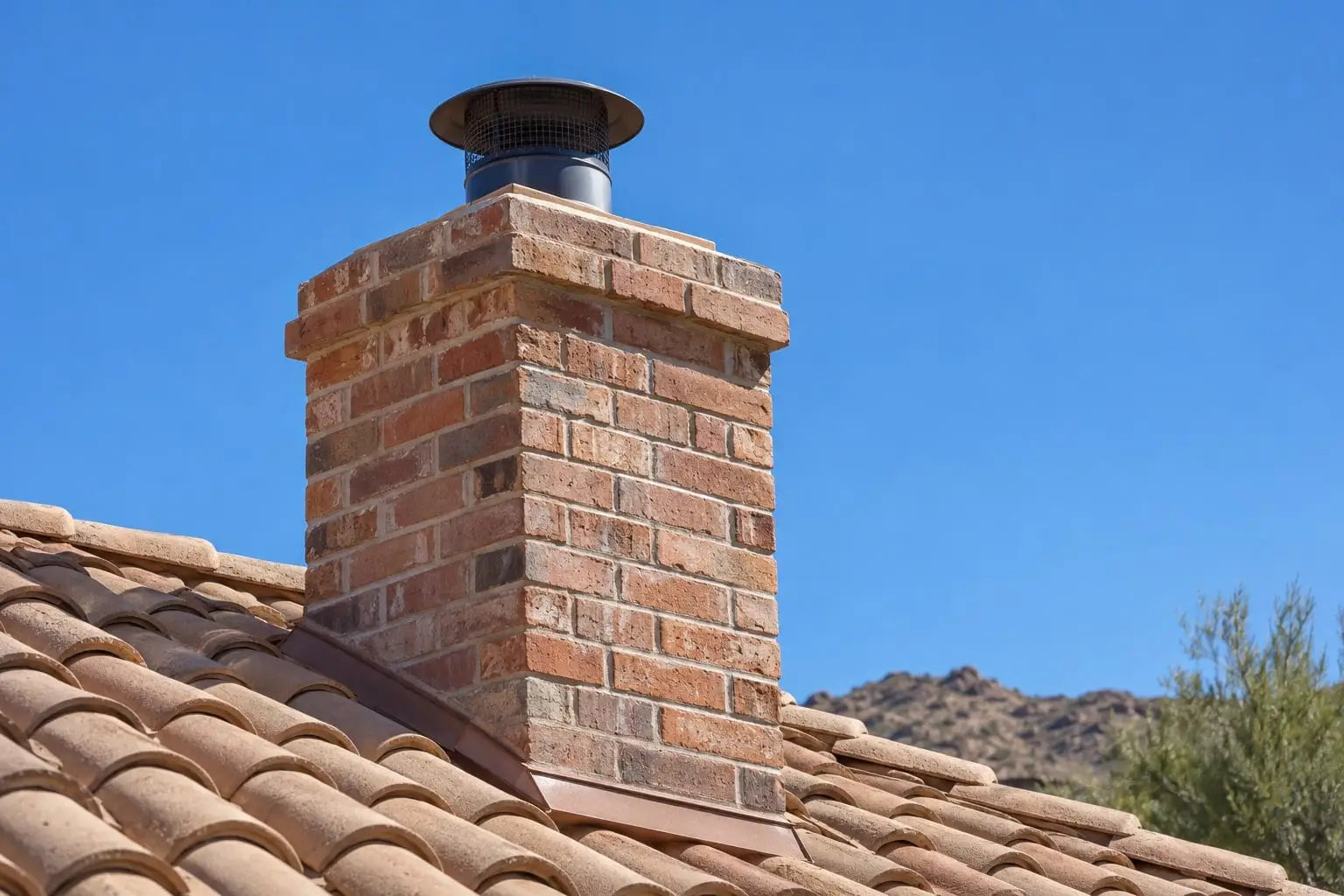
Chimney inspection
A look at the firebox, flue, damper, crown and cap, with a plain account of what we find.
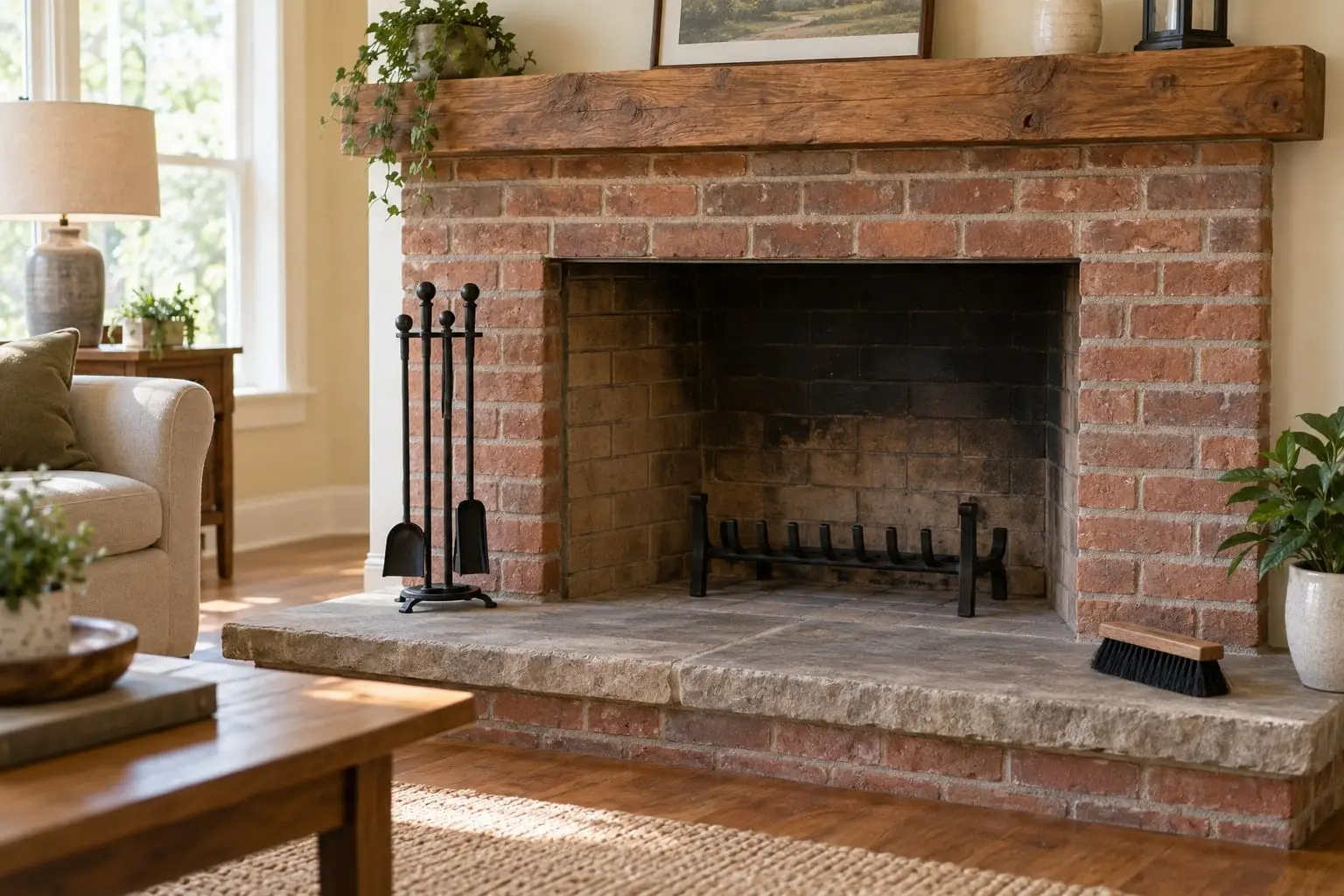
Chimney sweep and cleaning
Chimney sweep service: soot and creosote cleared from the flue, smoke shelf and firebox.
The photographs are AI-generated illustrations, not jobs of ours.
Ready to find out what your chimney needs?
Tell us what needs cleaning and leave your number. We call you back to set a time.